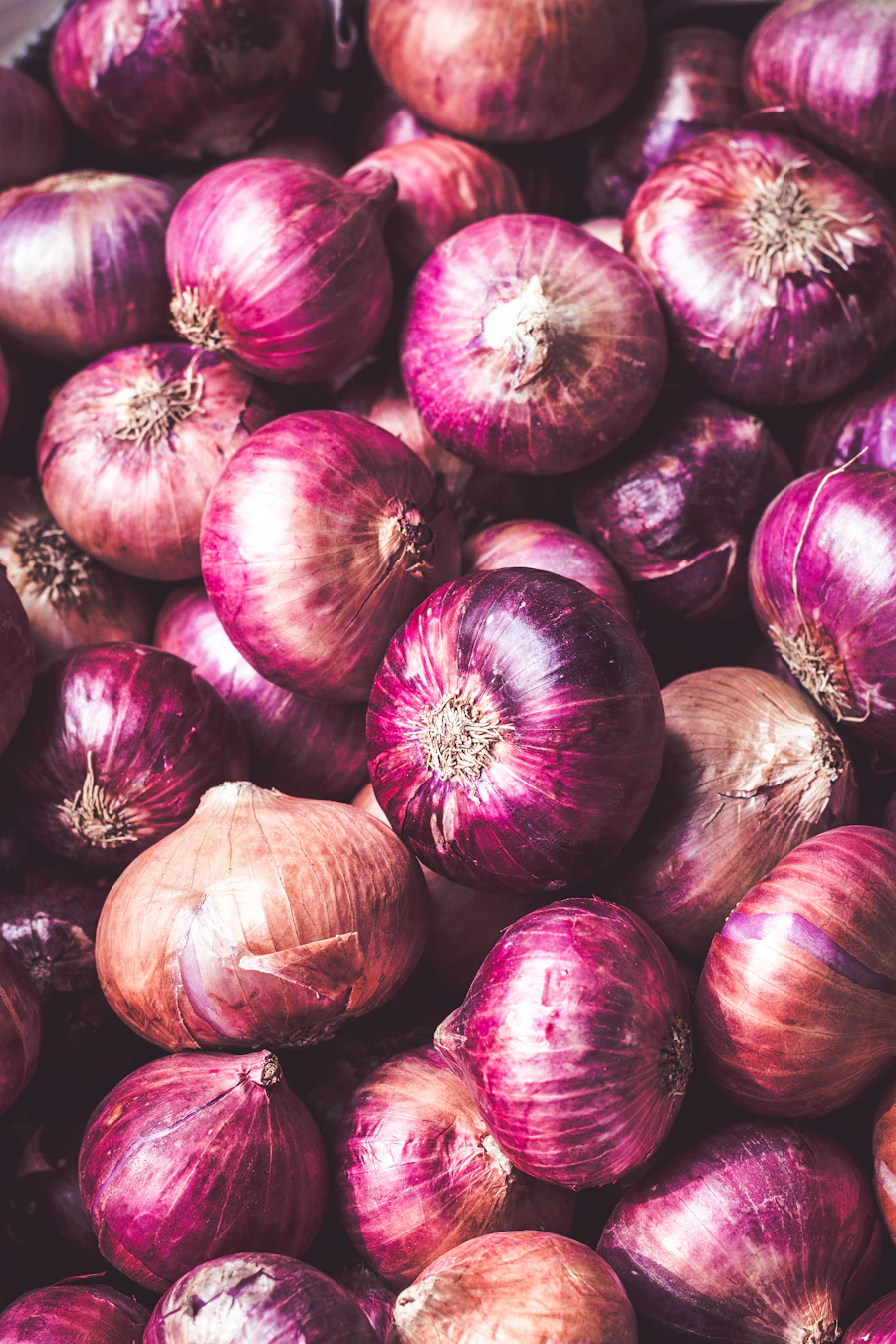
Onions cause gas and bloating mainly because they contain fructans, a type of carbohydrate that your small intestine can't digest. Gut bacteria ferment them in the large intestine, which produces gas.
What are fructans?
Fructans are chains of fructose (a fruit sugar) linked together. Humans lack the enzymes to break these links, so fructans travel undigested to the large intestine. There, gut bacteria feed on them and release gases such as hydrogen and carbon dioxide. Fructans also draw extra water into the gut, which can add to the feeling of fullness.
This is the same process that happens with many healthy fibre-rich foods, and for most people it's harmless. Fructans are often called prebiotics because they feed beneficial bacteria. Research generally supports this prebiotic effect, though the health benefits for people overall are less firmly established.
Fructans are part of a group of fermentable carbohydrates called FODMAPs. Onions and garlic are among the best-known high-FODMAP foods, according to research from Monash University, which developed the low-FODMAP diet.
Who is most affected?
- People with irritable bowel syndrome (IBS): Their guts tend to be more sensitive to stretching and gas. Clinical trials show a low-FODMAP diet reduces symptoms in many, though not all, people with IBS.
- People who rarely eat onions or garlic: Your gut bacteria may adjust over time, though this varies from person to person.
- People who eat large portions: Fructans add up across a meal, so a little onion in a dish is usually tolerated better than a heap of raw onion.
For context, USDA data for raw onions show 9.3 g of carbohydrate and 1.7 g of fibre per 100 g (about 40 kcal). One medium onion is 110 g. USDA doesn't list fructans separately, so those figures don't show how much of the carbohydrate is fructan.
How to reduce the effect
- Eat smaller amounts. Portion size matters more than anything else.
- Try the green tops of spring onions. They are generally lower in fructans than the white bulb, according to Monash testing.
- Infuse oil. Fructans don't dissolve in fat, so onion or garlic gently cooked in oil, with the pieces removed, gives flavour with far fewer fructans. This is a common low-FODMAP trick.
- Don't count on cooking. Cooking softens onions and may make them easier on some people, but fructans mostly stay in the food or leach into the cooking liquid rather than being destroyed.
- Garlic behaves similarly. It's also high in fructans, but you usually eat much less of it, so a typical amount causes fewer problems. USDA lists a teaspoon as 2.8 g.
When to get advice
Occasional gas after onions is normal. If you have frequent bloating, pain, weight loss, blood in stools, or changes in bowel habits, see a doctor to rule out other conditions. If you want to try a low-FODMAP diet, a registered dietitian can guide you. Cutting out onions and similar foods long-term without support can limit variety and may reduce fibre intake.