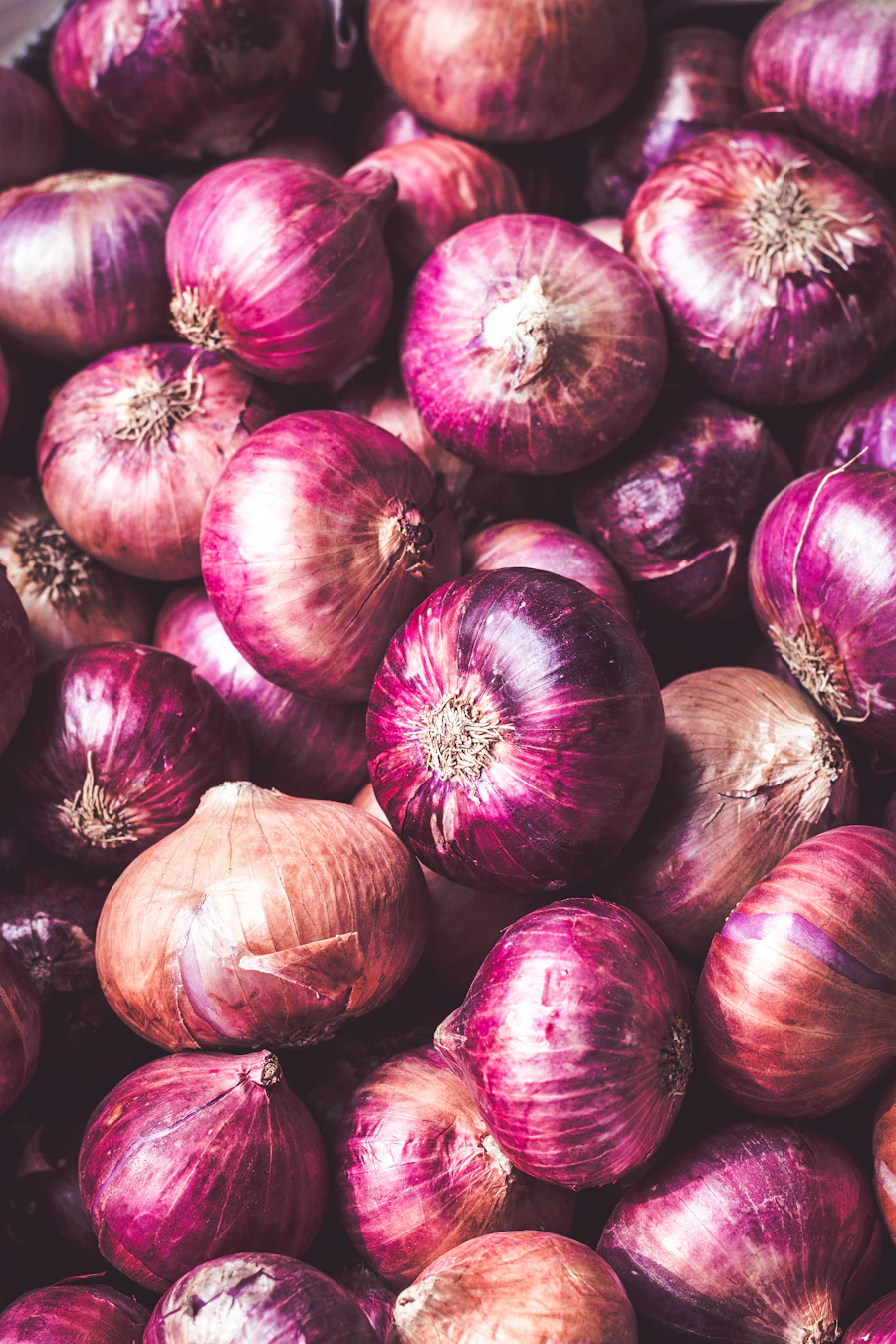
Garlic, onions, and asparagus are among the best vegetable prebiotic sources. They are rich in fibers called fructans and inulin, which your gut bacteria ferment. Potatoes can also contribute when cooked and cooled.
What "prebiotic" means
Prebiotics are food components your body can't digest but that feed helpful bacteria in your large intestine. The best-studied ones are inulin and fructo-oligosaccharides (FOS), both types of fructan, a chain of fructose sugar units. Evidence that prebiotic fibers boost bifidobacteria (a group of beneficial gut bacteria) is fairly consistent in human trials. Evidence that eating specific vegetables improves health outcomes is weaker, because most studies use concentrated supplements rather than whole foods.
Vegetables from the data
USDA lists total fiber but doesn't separate out inulin or fructans, so the table shows only overall fiber (per 100 g, raw, from USDA):
| Vegetable | Fiber | Calories |
|---|---|---|
| Asparagus | 2.1 g | 20 kcal |
| Onion | 1.7 g | 40 kcal |
| Garlic | 2.1 g | 149 kcal |
| Potato (flesh and skin) | 2.1 g | 77 kcal |
- Garlic is one of the richest sources of fructans by weight, though a typical serving is small. One teaspoon (2.8 g) has only about 0.06 g of fiber by USDA's numbers, so it's a flavorful contributor rather than a major one.
- Onions are a common, easy source. One medium onion (110 g) has about 1.9 g of fiber. Fructan content is generally higher in raw onion and can drop somewhat with long cooking.
- Asparagus contains inulin-type fructans. One cup (134 g) has about 2.8 g of fiber.
- Potatoes have about 2.1 g of fiber per 100 g, but the prebiotic angle is different. When potatoes are cooked and then cooled, some starch becomes resistant starch, which also feeds gut bacteria. Studies support this effect, but the amount varies with how they're prepared.
Other vegetables often cited
These aren't in the data above, so no nutrient numbers are given. Research generally identifies these as good sources of fructans or other fermentable fibers:
- Leeks and shallots, close relatives of onion and garlic
- Jerusalem artichokes and chicory root, which are among the highest in inulin
- Artichokes (globe)
- Beans, lentils, and chickpeas, which are legumes rather than vegetables in the strict sense, but rich in fermentable fibers such as galacto-oligosaccharides
Practical tips
- Go gradually. Fermenting these fibers produces gas, and some people get bloating or discomfort. Increasing portions slowly helps.
- Watch for sensitivity. Garlic, onions, and asparagus are high in FODMAPs, fermentable carbohydrates that can aggravate irritable bowel syndrome (IBS). If you have IBS or another digestive condition, a doctor or registered dietitian can help you decide how much to eat.
- Vary your sources. Different fibers feed different bacteria, so a mix of vegetables, legumes, and whole grains is likely better than relying on one food.