Reflux (gastroesophageal reflux, where stomach acid flows back up toward the throat) has no single "avoid" list that works for everyone. The foods most often reported as triggers are fatty or fried foods, chocolate, mint, coffee, alcohol, spicy dishes, citrus, tomato products and onions, but research shows the evidence for strict avoidance is fairly weak, so it's best to cut only the foods that bother you.
What the research generally shows
- Strongest evidence: Large meals, eating close to bedtime, and (for people who are overweight) weight loss. These are better supported than avoiding any particular food.
- Fatty and fried foods: These slow stomach emptying and may relax the valve at the bottom of the esophagus (the lower esophageal sphincter). Evidence is moderate.
- Alcohol, coffee, chocolate, mint: Commonly named triggers, but studies are mixed. Some people react strongly, and others notice nothing.
- Citrus, tomato, spicy foods: These can irritate an esophagus that is already inflamed, but they don't clearly cause more acid to back up. Reactions are very individual.
- Carbonated drinks: Bubbles can cause burping and pressure, which may push acid upward in some people.
Tomatoes and onions
Tomatoes and onions are two of the most frequently blamed foods, so here is what is in them. These figures are from USDA, per 100 g of the raw food:
| Tomato | Onion | |
|---|---|---|
| Calories | 18 kcal | 40 kcal |
| Fiber | 1.2 g | 1.7 g |
| Fat | 0.2 g | 0.1 g |
| Vitamin C | 14 mg | 7.4 mg |
| Potassium | 237 mg | 146 mg |
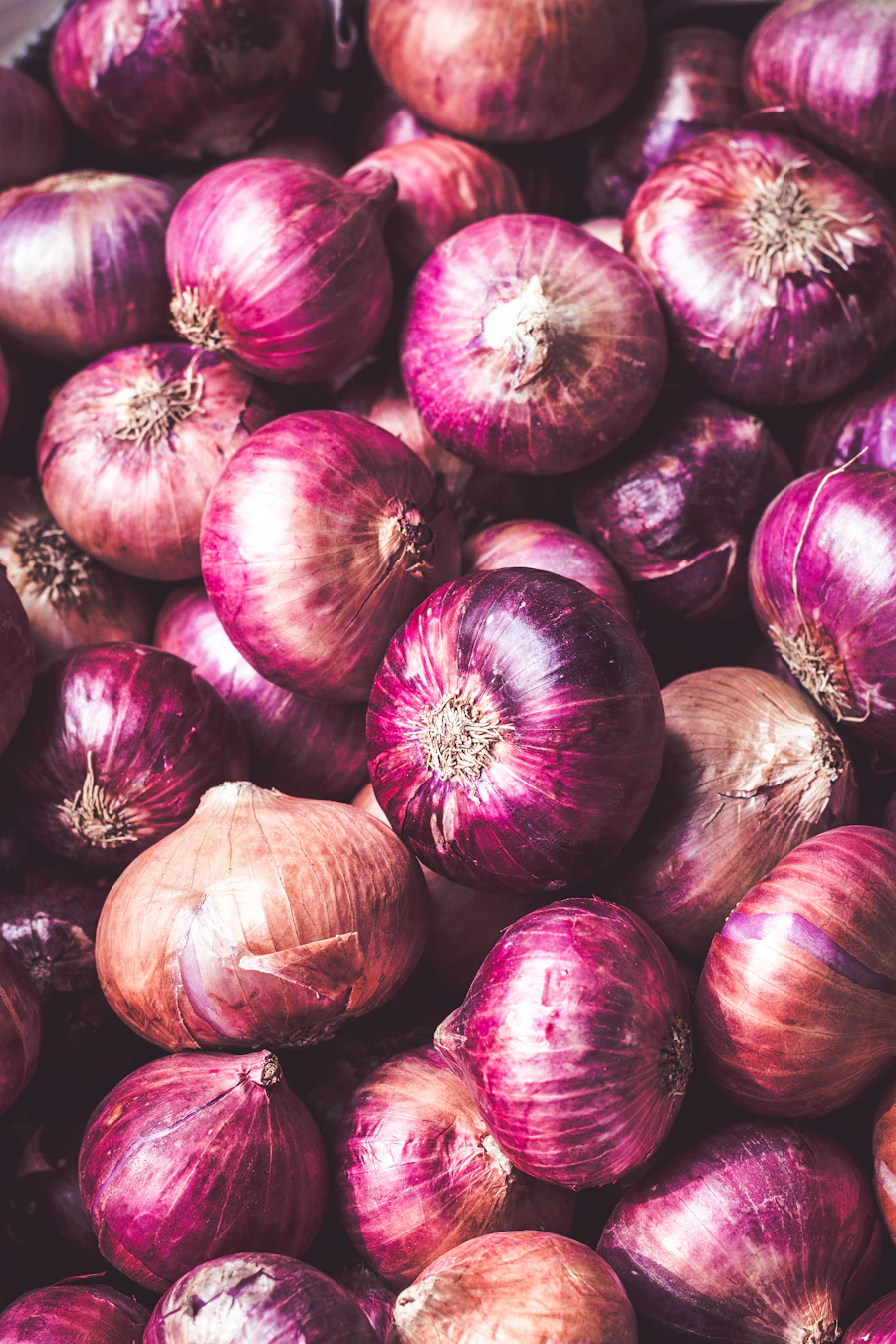
Both are low in fat, which is a point in their favor. Tomatoes are naturally acidic, and vitamin C adds a little to that, though the amount of acid in a food doesn't reliably predict whether it will cause symptoms. Onions, especially raw, are among the more commonly reported triggers, possibly because they can relax the esophageal valve or ferment in the gut. Studies on both are limited and inconsistent. If they bother you, try cooked onion or smaller portions, or leave them out for a while and see.
How to find your own triggers
- Keep a food and symptom diary for two to three weeks.
- Remove one suspected food at a time for a couple of weeks, then reintroduce it and note what happens.
- Eat smaller meals, and finish eating at least two to three hours before lying down.
- Raise the head of your bed if nighttime symptoms are the problem.
Avoiding foods that don't affect you can needlessly limit a healthy diet, so keep the list short.
When to get help
Heartburn that happens more than twice a week, trouble swallowing, unexplained weight loss, vomiting, or black stools should be checked by a doctor. The same goes for reflux during pregnancy or if you take antacids or acid-reducing medication regularly. A doctor, pharmacist or registered dietitian can help tailor advice to you.