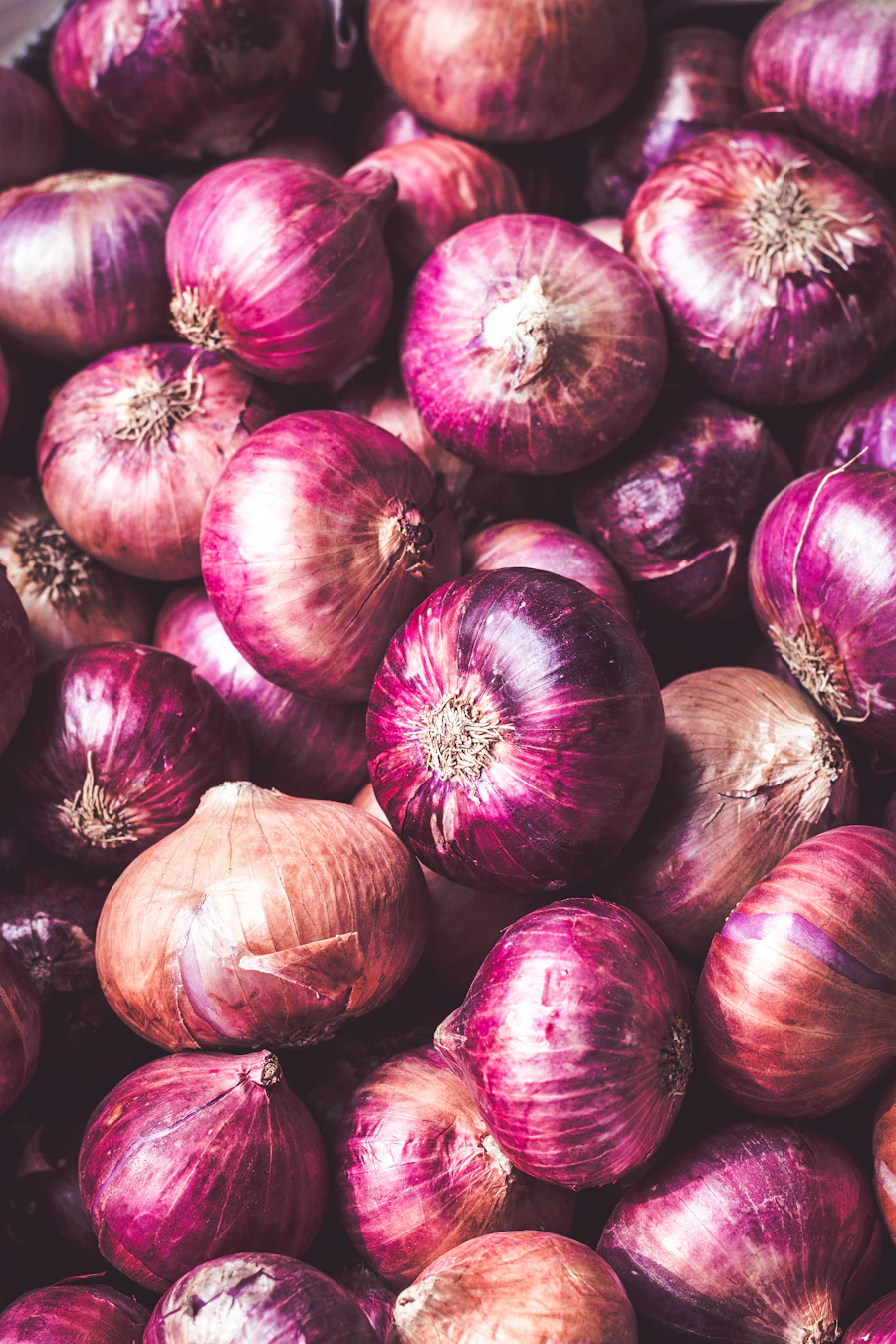
Onions are low in calories but rich in plant compounds — USDA data for raw onion shows just 40 kcal per 100 g, with 1.7 g fiber and 7.4 mg vitamin C, and research links the sulfur compounds and flavonoids (notably quercetin) in onions to modest benefits for heart health, blood sugar and inflammation.
What's actually in an onion
All figures below are from the USDA for raw onion, given per 100 g and per medium onion (110 g):
| Nutrient | Per 100 g | Per medium onion (110 g) |
|---|---|---|
| Calories | 40 kcal | 44 kcal |
| Carbohydrates | 9.3 g | 10.2 g |
| Sugars | 4.2 g | 4.6 g |
| Fiber | 1.7 g | 1.9 g |
| Protein | 1.1 g | 1.2 g |
| Vitamin C | 7.4 mg | 8.1 mg |
| Vitamin B6 | 0.12 mg | 0.13 mg |
| Folate | 19 µg | 21 µg |
| Potassium | 146 mg | 161 mg |
| Calcium | 23 mg | 25 mg |
| Sodium | 4 mg | 4 mg |
So an onion is not a nutrient powerhouse in the vitamin-and-mineral sense — a medium onion covers roughly 9% of an adult's daily vitamin C. Its real interest lies in compounds that don't show up on a nutrition label.
The compounds behind the claimed benefits
- Quercetin — a flavonoid (a plant pigment with antioxidant activity). Onions, especially red and yellow varieties, are one of the richest everyday dietary sources. Human trials suggest quercetin-rich onion extracts can lower blood pressure slightly in people who already have elevated readings — typically a few mmHg. The evidence is suggestive, not conclusive, and relies on concentrated doses more than ordinary portions.
- Organosulfur compounds — the same chemistry that makes you cry. These are studied for effects on cholesterol, platelet stickiness and inflammation. Lab and animal findings are strong; human results are mixed and modest.
- Fructans (a type of prebiotic fiber) — onions feed beneficial gut bacteria. This is reasonably well established, though the same fructans trigger bloating in people with irritable bowel syndrome, which is why onion is restricted on low-FODMAP diets.
What the research supports — and how firmly
- Heart health: Population studies consistently find that people eating more allium vegetables (onions, garlic, leeks) have somewhat lower cardiovascular risk. Because onion-eaters tend to eat more vegetables overall, cause and effect isn't proven.
- Blood sugar: Small trials of onion extract show modest reductions in fasting glucose. Promising but preliminary; onions are not a treatment for diabetes.
- Cancer risk: Observational research links high allium intake with lower stomach and colorectal cancer rates. Evidence is moderate at best and mostly from East Asian and Mediterranean populations.
- Antioxidant and anti-inflammatory effects: Well demonstrated in the lab; real-world clinical significance from food amounts is unclear.
Practical tips
- Red and yellow onions carry far more flavonoids than white; the outer layers hold the most, so peel sparingly.
- Gentle cooking preserves most quercetin, but prolonged boiling leaches it into the water — use that liquid in soups.
- Chopping and letting onion rest a few minutes helps sulfur compounds form.
- Raw onion keeps more vitamin C, which degrades with heat.
If you take blood thinners, have IBS, or are considering concentrated onion or quercetin supplements rather than food, check with a doctor, pharmacist or registered dietitian first — supplement doses behave differently from the onion in your dinner.