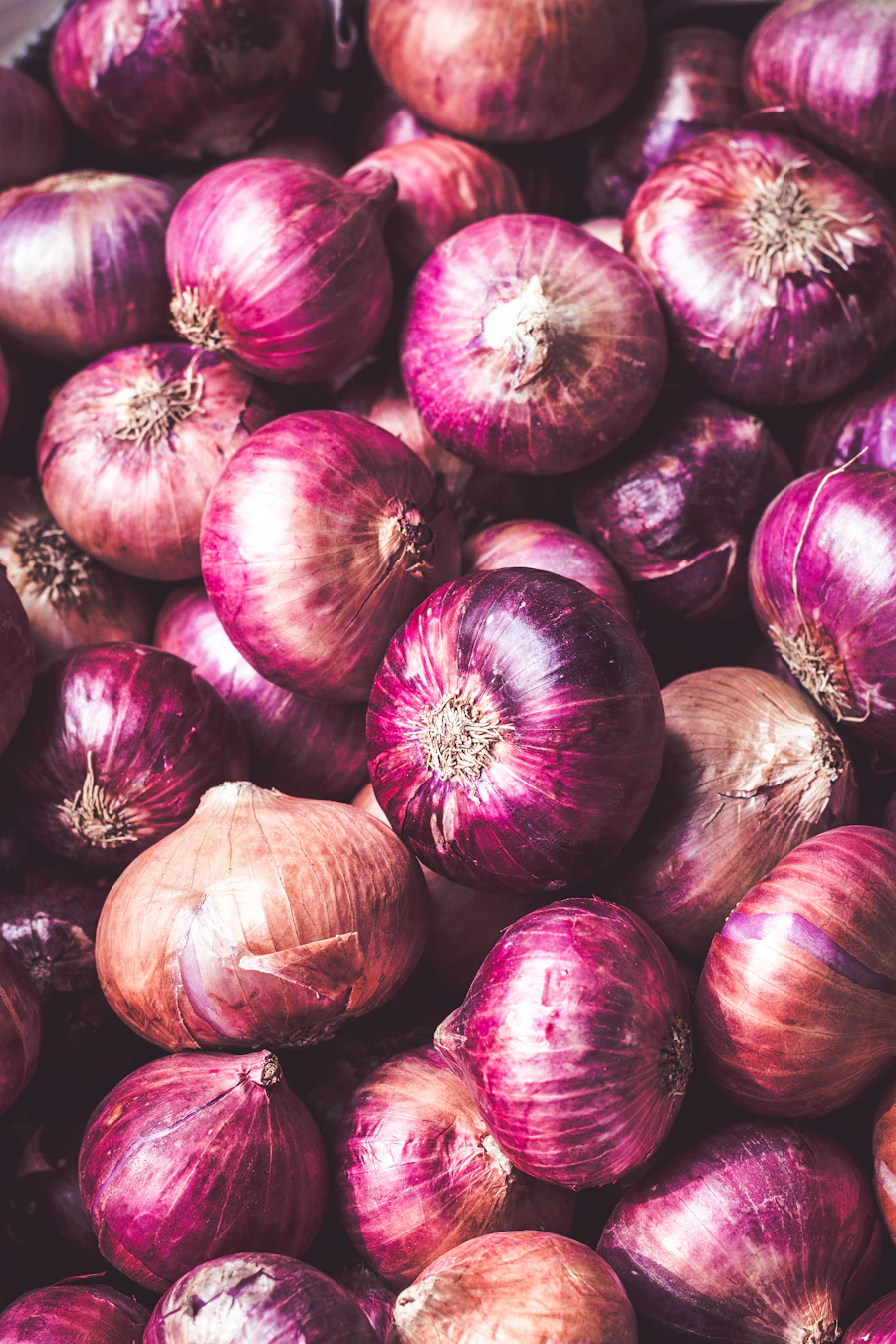
There's no official daily requirement for onions, but research on heart health and cancer risk tends to cluster around roughly half a medium onion to one medium onion a day — about 50–100 g — and even smaller amounts counted toward the general vegetable target of about 400 g a day. Onions are low in calories, so a daily serving fits easily into most eating patterns.
What a daily onion actually gives you
USDA figures for raw onion, per 100 g (about 90% of one medium onion, which USDA lists as 110 g):
| Nutrient | Per 100 g raw |
|---|---|
| Calories | 40 kcal |
| Carbohydrates | 9.3 g |
| Sugars | 4.2 g |
| Fiber | 1.7 g |
| Protein | 1.1 g |
| Vitamin C | 7.4 mg |
| Vitamin B6 | 0.12 mg |
| Folate | 19 µg |
| Potassium | 146 mg |
| Calcium | 23 mg |
So a medium onion (110 g) is around 44 calories, roughly 1.9 g of fiber and about 8 mg of vitamin C — useful, but onions aren't a standout source of any single vitamin or mineral. Their interest to researchers comes from compounds the nutrient table doesn't show: quercetin (a plant pigment and antioxidant, especially concentrated in red and yellow onions and in the outer layers) and organosulfur compounds, the sulfur-containing molecules released when you chop them that also cause the eye-watering.
What the evidence suggests about amounts
- Observational studies linking higher onion and allium (onion/garlic family) intake with lower rates of stomach and colorectal cancer generally compare people eating the most versus the least — often in the range of a half to a whole onion daily. This evidence is suggestive, not proof; diet surveys can't separate onions from an overall vegetable-rich diet.
- Blood pressure and cholesterol trials have mostly used concentrated quercetin or onion extracts rather than whole onions, with modest effects. One often-cited trial used about 100 g of onion a day.
- Blood sugar: small trials of raw onion in people with diabetes show mixed and generally short-term results. Not strong enough to treat onions as a glucose-lowering food.
A practical takeaway: aim for onion as a regular part of your cooking — say 50–100 g most days — rather than chasing a specific dose.
Can you overdo it?
For most people, large amounts are safe but can be uncomfortable:
- Onions are high in fructans, a type of fermentable carbohydrate, and are a common trigger for bloating, gas and cramping in people with irritable bowel syndrome (IBS). Low-FODMAP diets restrict them, and the infused oil (which carries flavour but not fructans) is a common workaround.
- Raw onion can worsen heartburn or reflux in some people.
- Onions have mild natural blood-thinning activity. Normal food amounts are not a concern, but if you take warfarin or another anticoagulant, or you're considering concentrated onion or garlic supplements, check with your doctor or pharmacist.
Getting the most from them
- Cut onions and let them sit a few minutes before heating; this gives enzymes time to form the sulfur compounds.
- Keep the outer fleshy layers — quercetin is most concentrated near the skin.
- Red and yellow onions carry more flavonoids than white onions.
- Gentle cooking preserves more quercetin than long boiling, since some leaches into the water (which you can keep in soups and stews).