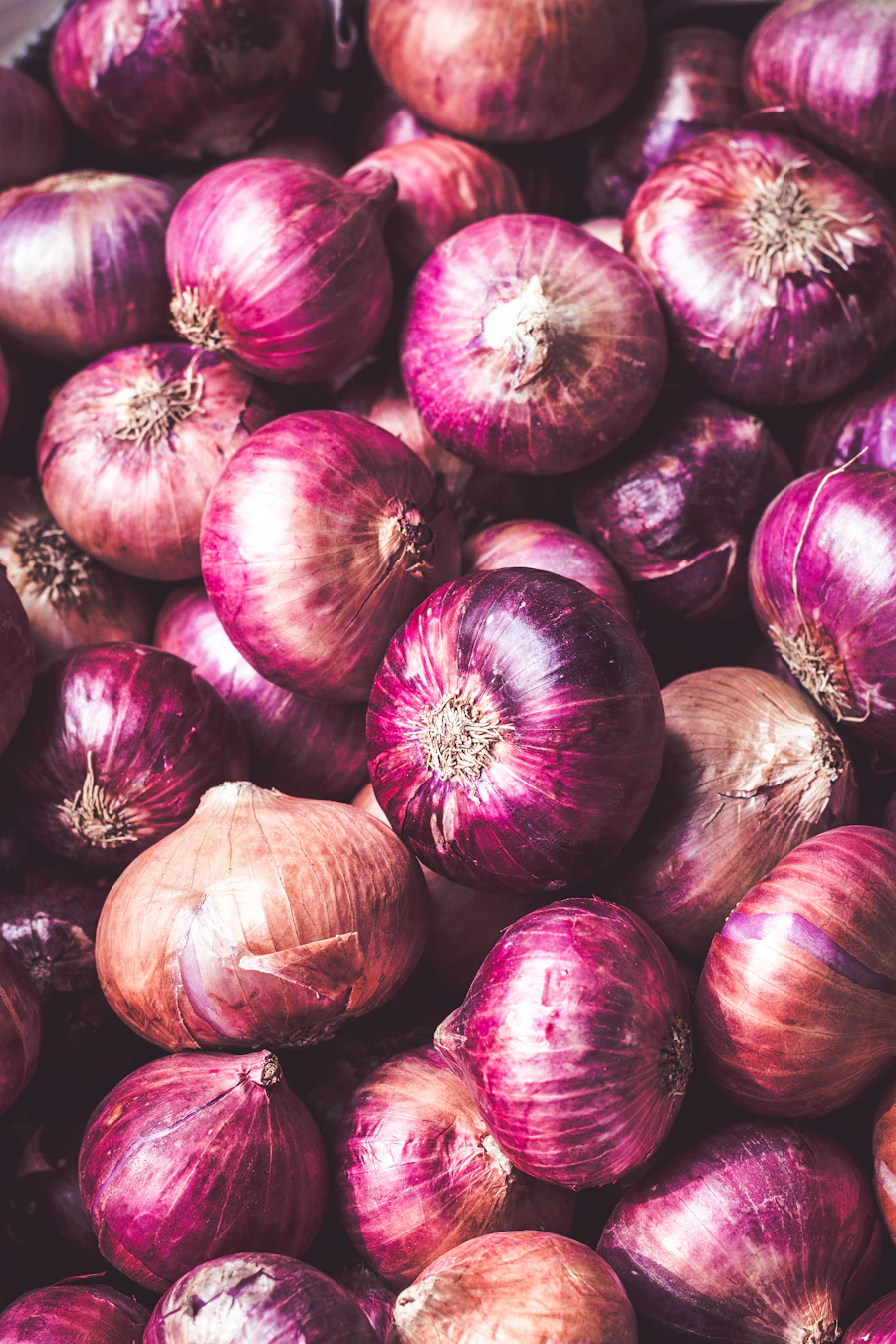
Yes, but usually not dramatically. Gentle sautéing tends to keep most of an onion's main antioxidants (flavonoids such as quercetin) fairly intact, while harsher or longer cooking, and boiling, can reduce them. The research is reasonably consistent on the overall pattern, but exact numbers vary a lot between studies.
What's in an onion
USDA lists raw onions at 40 kcal per 100 g, with 7.4 mg of vitamin C per 100 g (a modest amount). The USDA data doesn't cover antioxidants like quercetin, so what follows comes from general research rather than USDA figures.
Onions' best-known antioxidants are:
- Flavonoids, especially quercetin, a plant pigment concentrated in the outer layers. Red and yellow onions have much more than white ones.
- Sulfur compounds, which give onions their sharp smell and flavor and have some antioxidant activity.
- Vitamin C, which is present but is not the main antioxidant source in onions.
What happens when you sauté
- Quercetin is fairly heat-stable. Studies comparing cooking methods generally find that sautéing or stir-frying causes small losses, or sometimes no loss at all. Some studies even measure higher levels afterward, probably because cooking breaks down cell walls and makes the compounds easier to extract and measure. Whether that means your body absorbs more is less certain.
- Boiling loses more. Quercetin leaches into the cooking water, and studies have found notable losses (often a third or more) when the water is thrown away. Eating the liquid, as in soup, keeps it.
- Vitamin C drops with heat. It is sensitive to heat and water, so cooking lowers it. Since onions aren't a major source, this matters little.
- Sulfur compounds change. Cooking transforms the sharp compounds into milder, sweeter ones. Some of their potential benefits may be reduced, though the evidence on this is limited.
- Long, high-heat cooking (heavy browning or burning) likely degrades more antioxidants. Caramelizing is a gentler process than frying, but it takes a long time, so some loss is plausible.
Practical tips
- Sauté over medium heat rather than high, and stop when the onions are soft and golden.
- Don't peel off more of the outer layers than necessary, since flavonoids are concentrated there.
- Choose yellow or red onions if you want more flavonoids.
- If you boil onions, use the cooking liquid in the dish.
- Eating a mix of raw and cooked onions is a reasonable approach, since each form offers something a little different.
How strong is the evidence?
Lab measurements of antioxidant levels are fairly well established. What those levels mean for health is less clear. Antioxidant content in a test tube doesn't directly predict benefits in the body, and diets rich in vegetables, including onions, are linked to good health in general rather than to a specific cooking method. In practice, how often you eat vegetables matters more than whether you sauté or eat them raw.