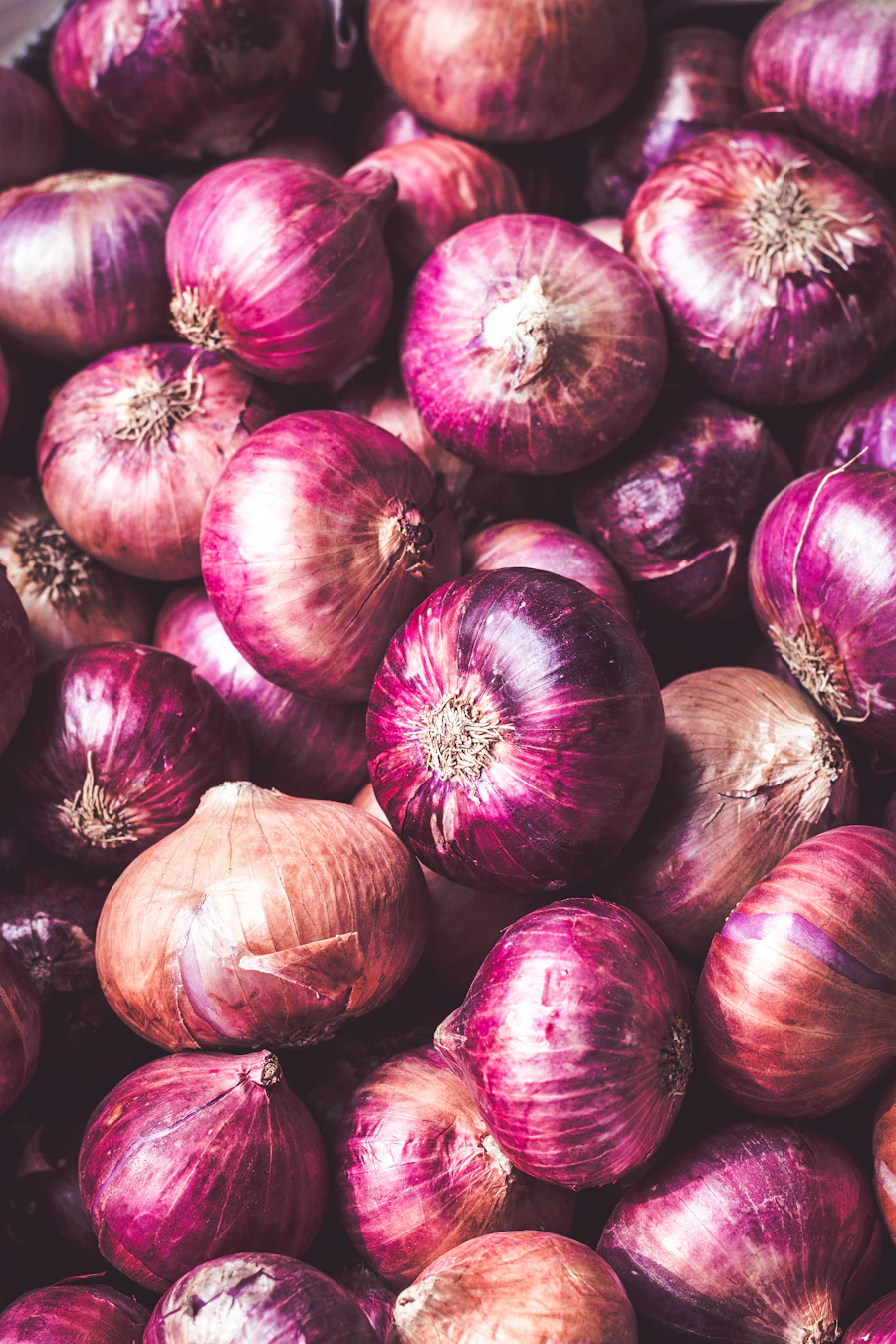
Cooking onions does change their nutrients, but they don't lose them all. Some vitamin C and some protective plant compounds drop, especially with boiling, while the fiber, minerals and calories stay largely the same.
What raw onions contain
According to USDA data ("Onions, raw"), 100 g of raw onion (a bit less than one medium onion, which is about 110 g) provides:
- 40 kcal
- 1.7 g fiber
- 7.4 mg vitamin C
- 19 µg folate
- 146 mg potassium
- 0.12 mg vitamin B6
Onions are not a major source of any single vitamin or mineral. Their value comes from modest amounts of many nutrients, plus plant compounds. Those compounds are the part most affected by cooking.
What cooking changes
- Vitamin C and folate are water-soluble (they dissolve in water) and sensitive to heat. Boiling can cause noticeable losses, mostly because the vitamins leach into the cooking water. Since onions have only a little vitamin C to begin with, this matters little for your overall intake.
- Minerals and fiber are stable under heat. Boiling can move some minerals into the water, but if you eat the broth, as in soup, you get them back.
- Flavonoids are plant pigments, and the main one in onions is quercetin. Studies generally show that frying and boiling can reduce quercetin somewhat, with boiling causing more loss because it dissolves into the water. Steaming, microwaving and light sautéing tend to preserve more. Exact losses vary by method, time and onion variety, so the figures in individual studies shouldn't be treated as precise.
- Sulfur compounds give onions their sharp smell and are linked to some of their potential health effects. Heat changes them and mellows the flavor. Whether this meaningfully changes health benefits is not well established.
Cooking isn't purely a loss, either. Some research suggests heat can make certain compounds easier for the body to absorb, though the evidence on onions specifically is limited.
How to keep more nutrients
- Sauté, roast or microwave briefly rather than boiling for a long time.
- If you boil onions, use the liquid in a soup, stew or sauce.
- Cut them and let them sit for a few minutes before cooking. Some researchers think this helps preserve certain sulfur compounds, though the evidence is preliminary.
- Mix raw and cooked onions across your meals if you like both.
The bottom line
Cooked onions are still a healthy, low-calorie food that adds fiber, flavor and plant compounds to a meal. The best cooking method is the one that gets you to eat more vegetables. The differences between methods are small compared with the benefit of including onions at all.