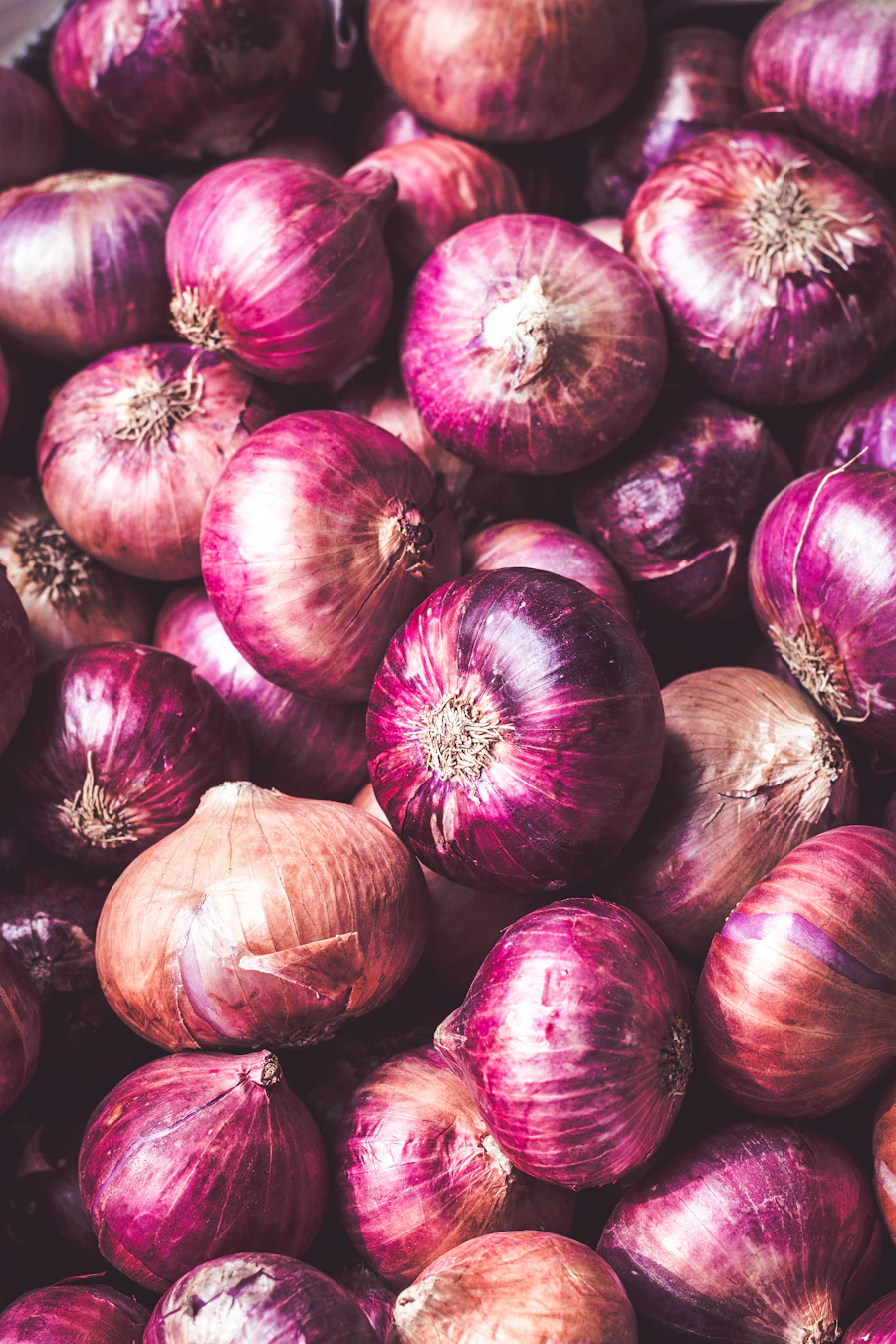
Cooked onions are often easier to digest than raw ones, but the difference depends on the person. Cooking softens onion's fiber and mellows its sharp compounds, which many people find gentler. It does not remove the main carbohydrates that cause gas in sensitive people.
What makes raw onions hard on the gut
Raw onion has two things that can cause trouble:
- Fructans: These are chains of fructose (a fruit sugar) that the small intestine can't break down. They travel to the large intestine, where gut bacteria ferment them and produce gas. This is a well-established mechanism, and onions are a well-known high-fructan food. People with irritable bowel syndrome (IBS) are often especially sensitive.
- Sulfur compounds: When you cut a raw onion, it releases pungent sulfur compounds. These can cause heartburn or stomach irritation in some people. Evidence here is mostly anecdotal and from small studies, so it is less settled.
USDA lists raw onion at 1.7 g of fiber and 4.2 g of sugars per 100 g. Those figures don't separate out fructans, so they don't show how much of the problem carbohydrate is present.
What cooking changes
- Texture and sharpness: Heat softens the cell walls and breaks down some of the irritating sulfur compounds. This is why cooked onion is milder in taste and often feels gentler on the stomach.
- Fructans: Cooking doesn't reliably remove them. Some may leach into cooking liquid (as in soup or boiled dishes), but if you eat the liquid, you still get them. Sautéing or roasting keeps nearly all of them.
- Nutrients: Raw onion has 7.4 mg of vitamin C per 100 g (USDA). Vitamin C is sensitive to heat and water, so cooking reduces it. Onion isn't a major vitamin C source either way.
Practical tips
- If raw onion upsets you, try it well cooked (sautéed until soft, in soups or stews) and see how you feel.
- Start with small portions. One medium onion is about 110 g (USDA), which is a lot for a sensitive gut. A few tablespoons are a much gentler test.
- If you have IBS, a low-FODMAP diet (which limits fermentable carbs like fructans) usually restricts onion in any form. Green tops of spring onions and onion-infused oil are often tolerated better, because fructans don't dissolve into oil. A registered dietitian can guide you through this.
- Persistent bloating, pain, or reflux is worth discussing with a doctor or dietitian, since it can have causes other than onion.
Bottom line
Cooking makes onions milder and often more comfortable, mainly by softening them and reducing irritating compounds. If fructans are your issue, cooked onion may still cause symptoms, so portion size matters as much as preparation.